



Image Image Image Image Image Image Image Image Image

News

Big News: Sen. Dick Durbin Introduces Adjunct Faculty Loan Fairness Act

July 31, 2014 | By |

With advanced degrees, adjunct faculty are well-prepared to teach. But with such degrees often comes significant debt, and few options for keeping the student debt burden manageable. A new bill introduced in the U.S. Senate reflects the momentum adjunct faculty have created in the past year toward making big changes in their workplaces while helping shape the future of higher education.

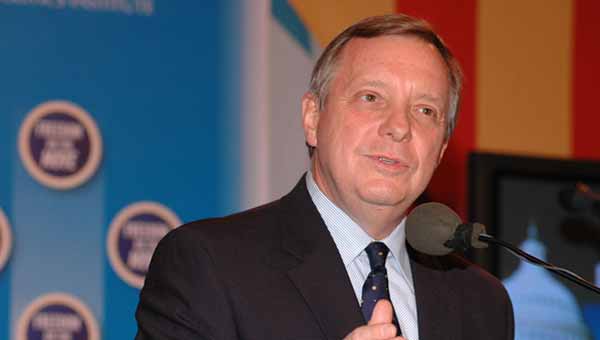
Yesterday, Senate Majority Whip Dick Durbin (D-IL) introduced legislation that will help adjunct faculty access the Public Service Loan Forgiveness Program (PSLF). The Adjunct Faculty Loan Fairness Act would make a tremendous impact on the lives of thousands of adjunct and contingent faculty, who now make up a majority of America’s college instructors and more than half of whom work part-time.

“As their budgets have tightened, colleges and universities have become increasingly reliant upon part-time adjunct faculty who face low pay, few if any benefits, and minimal job security,” Durbin said in a statement. “The vast majority of these educators hold advanced degrees, and as a result, bear the heavy burden of student loan debt. It is only right that we expand their access to the Public Service Loan Forgiveness program, a benefit already available to many of their full-time colleagues.”

“As a part-time, temporary worker with a crushing amount of school debt, I know how important student debt reform is for ensuring education retains the promise of social mobility for both me and my fellow adjuncts and the students we teach,” said Marga Ryersbach, an adjunct who teaches in New York. “I’m pleased that Senator Durbin is working to make sure we have access to a program that helps correct the imbalances wrought by huge amounts of education debt.”

Student debt has become a national issue and it’s one that is critically important for part-time and non-tenure track faculty, as the average debt burden for borrowers with advanced degrees is now $61,000. Furthermore, the average pay per course reported by adjunct faculty is approximately $3,000, which means that an adjunct who teaches eight courses per year will make just $24,000 annually. Adjunct faculty often have trouble making ends meet, let alone, paying down their student debt.

Congress created the PSLF program in 2007 to offer student loan forgiveness to people with careers in the public or nonprofit sectors. But as the program is currently structured, many adjunct faculty are not eligible to participate. The current law states that in order to be eligible for PSLF a person must work an average of 30 hours a week over the course of a year. Since adjunct faculty do not have control over their course load (most times school administrators decide how many classes an instructor can teach), whether they meet the 30 hour requirement is out of their hands. As a result, just one semester or year with a low course load can prevent adjunct faculty from obtaining PSLF credit for their public service for that year.

The Adjunct Faculty Loan Fairness Act will allow adjunct faculty to access PSLF even if they have a low course load that does not meet the 30 hour eligibility requirement. Those who teach at least one course in a given year will qualify for PSLF. However, contingent faculty who have a separate, full-time, private sector job will not have access to this program. This means that the program will only be open to those adjunct faculty who really need the benefits of PSLF—those who make a living from teaching.

“While we are joining together for a voice at Hamline, we are also focused on the big challenges facing higher education,” Hamline University adjunct faculty member David Weiss said. “It’s great to know that adjunct and contingent faculty have allies in Congress like Senator Durbin who are working to ensure that adjunct faculty are included in the PSLF program. While thousands of contingent faculty are joining together, this bill is a huge opportunity to take our movement to the next level and change the lives of adjunct faculty members by improving the PSLF.”

Stay tuned for more on the Adjunct Faculty Loan Fairness Act and how you can get involved in making it a reality.

Adjunct Faculty Loan Fairness Act Factsheet

July 31, 2014 | By |

Part-time faculty are a large and growing part of the workforce in higher education.

  • In 2011, approximately 1.5 million faculty members worked in postsecondary education in the United States.[i] Of those, over 768,000 are part-time faculty.[ii]
  • The reality is that institutions of higher education now overwhelmingly rely upon adjunct academic labor. Adjunct professors are instructors that are hired on a course-by-course basis or a semester-to-semester basis, have no job security, are paid minimal compensation, are usually provided no benefits, and are outside the tenure system.

Adjunct faculty often have trouble making ends meet, paying student debt.

  • The average pay per course reported by adjunct faculty is approximately $3,000.[iii]An adjunct who teaches eight courses per year will make just $24,000 annually.
  • In order to “make it” in academia, most adjunct faculty must obtain advanced degrees. A 2012 survey by the Coalition on the Academic Workforce found that over 94% of the part-time faculty respondents had an advanced degree.[iv]
  • For most, pursuing an advanced degree means taking out student loans. Almost three-quarters of graduate degree recipients have an average of $61,120 in student loans.[v]

Public Service Loan Forgiveness (PSLF) Overview

  • The Public Service Loan Forgiveness program (PSLF), established as a part of the College Cost Reduction and Access Act of 2007 (Pub. L. No. 110-84, 121 Stat. 784 and codified as amended in scattered sections of 20 U.S.C.), is designed to encourage graduates to pursue a career in public service.
  • PSLF offers loan forgiveness after ten years (120 payments) of full-time work in government or the non-profit sector.

Coverage

  • PSLF covers government entities, public institutions and not-for-profit organizations that are tax-exempt under section 501(c)(3) of the Internal Revenue Code. The non-profit organizations include most private, not-for-profit elementary and secondary schools, private, not-for-profit colleges and universities, and thousands of other organizations, agencies, and charities.

Current Eligibility Requirements

  • In order to be eligible for the program, one must work “full-time,” which the statute defines as 30 hours per week over the course of a year.[vi]
  • If you work part-time, you can qualify for PSLF by combining the hours you work at multiple jobs for an overall average of 30 hours per week. If you do not meet that 30-hour requirement you will not get credit for PSLF for that year.

How does PSLF Fail Part-Time Faculty?

  • Some part-time faculty will meet the 30-hour benchmark by combining the hours they work at multiple jobs.
  • However, since school administrators decide how many courses a part-time instructor can teach, many part-time faculty have little control over their own course load. Part-time instructors do not get to choose whether they can meet the 30-hour eligibility requirement.
  • Just one semester with a low course load can prevent an instructor from obtaining credit for PSLF for that year. For instance, if an instructor teaches five 3-credit courses during the fall semester and just two 3-credit courses during the spring semester, he or she may fail to be eligible for PSLF and will not get credit for that year.

Overview of the Adjunct Faculty Loan Fairness Act

  • The Adjunct Faculty Loan Fairness Act will honor the public service of adjunct faculty by allowing adjunct faculty to access PSLF even if they have a low course load that does not meet the 30 hour eligibility requirement.
  • Adjunct faculty who teach at least one course in a given year will qualify for PSLF.
  • Adjunct faculty who have a separate, full-time, private sector job will not have access to this program. This means that the program will only be open to those adjunct faculty who really need the benefits of PSLF—those who make a living from teaching.

The Impact of the Adjunct Faculty Loan Fairness Act

  • Part-time faculty with student loans will be the only people impacted by this bill. There is no public data on the number of adjunct faculty with student loans. However, we do know, as referenced above, that:

o Adjunct faculty tend to have low wages and poor benefits, they have advanced degrees which means they probably have student loans, and they have a variable course load that is largely out of their control. Most importantly, they are vital public servants who need PSLF, yet are blocked from stable access to this important program as it’s currently structured.

[i] John W. Curtis, “The Employment Status of Instructional Staff Members in Higher Education, Fall 2011,” American Association of University Professors, April 2014, P5. http://www.aaup.org/sites/default/files/files/AAUP-InstrStaff2011-April2014.pdf.

[ii] Ibid.

[iii]Audrey Williams June and Jonah Newman, “Adjunct project reveals wide range in pay,” Chronicle of Higher Education, January 4, 2013, accessed October 3, 2013, http://chronicle.com/article/Adjunct-Project-Shows-Wide/136439/.

[iv]“A Portrait of Part-Time Faculty Members,” Table 9, Coalition on the Academic Workforce, June 2012, accessed October 3, 2013, http://www.academicworkforce.org/CAW_portrait_2012.pdf.

[v] “Average Undergraduate Debt, Graduate Debt, and Total Debt for Graduate Degree Recipients, 2007-08,” Figure 2009_8B, The College Board, http://trends.collegeboard.org/student-aid/figures-tables/average-undergraduate-debt-graduate-debt-and-total-debt-graduate-degree-recipients-2007-08.

[vi] Public Service Loan Forgiveness Program, 34 C.F.R. § 685.219 (2010).

Landslide victory for Antioch University Seattle faculty

July 24, 2014 | By |

In a resounding victory, Antioch University Seattle faculty have voted to form a union, joining a rapidly growing national movement to address the crisis in higher education and the troubling trend toward a marginalized teaching faculty.

All faculty stood together to overwhelmingly support a union by voting 85 to 14 to join SEIU Local 925. The National Labor Relations Board (NLRB) counted the votes for the all-mail ballot election on Wednesday.

The win is a 86 percent vote in favor of forming a union – a landslide victory for the faculty and the entire Antioch Seattle community.

“Time for celebration!” said core faculty member Alex Suarez. “Congratulations to the faculty and to everyone at Antioch University Seattle. We have taken an important step towards a more balanced dialogue. The faculty voices now have a better chance of being heard and given the respect and authority our experience merits. In a world where balance and dialogue are so necessary, we are better able to foster them. Where else can wisdom come from?”

Read the rest of the story at ACT Washington

The House of Representatives Sheds Light on Adjunct Working Conditions

July 23, 2014 | By |


On July 23, the U.S. House of Representatives passed the “Strengthening Transparency in Higher Education Act,” marking an important step toward bringing transparency to our higher education system. The bill will help millions of prospective and current college students make well-informed decisions about enrolling and attending college. It will also require universities to reveal important information about the working conditions of adjunct faculty, who are now the majority of faculty in higher education.

“This important legislation gives students, faculty, lawmakers and the public more information about what’s happening in higher education,” said SEIU International President Mary Kay Henry. “Over the past year, adjunct faculty have joined together to raise standards in our profession and it’s good to see Congress is interested in shining a spotlight on trends in higher education that have marginalized contingent and part-time faculty.”

SEIU helped to make sure that the “Strengthening Transparency in Higher Education Act” will also allow students and families to gain better information about academic working conditions. It requires institutions of higher education to report the ratio of the number of courses taught by part-time instructors and full-time instructors as well as the mean and median years of employment of their part-time instructors.

Andrew Nelson teaches English at Lindenwood University and East Central College in the St. Louis area. He said,“As an adjunct professor who has taught six years at the university and community college level, I have always placed student success at the top of my education philosophy; accordingly, I am pleased to see that HR 4983 is designed to assist students in pursuit of realizing their educational goals. I am also happy to see legislation that acknowledges the troubling trends in faculty working conditions nationally.Hopefully this bill is a step toward improving the working conditions of millions of adjuncts like myself.”

Read more about the bill and implications for part-time faculty at the Chronicle of Higher Education.

Conversation with Maria Maisto

July 23, 2014 | By |

On July 18, the Adjunct Action Network hosted a live on-air conversation with Maria Maisto of the New Faculty Majority. Maria was joined by April Freely of the Ohio Part Time Faculty Association. The conversation included helpful information about how and why adjuncts may organize.

A win for Laguna College of Art + Design part-time faculty

July 15, 2014 | By |

Following the win at Whittier College and two landslide victories in the Bay Area (at the San Francisco Art Institute and Mills College), part-time faculty at the Laguna College of Art + Design (LCAD) are the latest in a growing movement of California adjuncts who are building power with SEIU/Adjunct Action.

James Galindo LCAD“We are excited to join the other part-time faculty in L.A., the Bay Area and the rest of the country who are organizing to improve the working conditions and educational environment for students and faculty,” said James Galindo, a Fine Arts part-time instructor at LCAD. “We’re looking forward to working with the administration to address the issues that will benefit everyone at LCAD.”

On Monday July 14th, ballots were counted at the National Labor Relations Board, with the majority of LCAD part-time faculty voting in favor of forming a union with SEIU/Adjunct Action. LCAD part-time faculty join a growing movement of over 21,000 unionized adjuncts across the country who have won improvements in pay, job security, evaluation processes, and access to retirement benefits.

Petition to Department of Labor

July 14, 2014 | By |

Adjunct activists — including Miranda Merklein, Joe Fruscione, and Bri Bolin — have written a petition to Davie Weil, the new director of the Wage and Hour division at the Department of Labor demanding an investigation into higher ed hiring practices, including wage theft from adjuncts.

As the petition points out:

approximately 76% of college professors are contingent labor, predominantly hired on a semester-by-semester contract and making an average of $2500 per 3-credit course. The average yearly income of an adjunct professor hovers in the same range as minimum-wage fast food and retail workers, with many of the same labor problems: lack of job security, inability to find enough working hours to support themselves, lack of health or retirement benefits, periodic unemployment, and outright wage theft.

Make your voice heard on this important issue. Sign the petition here.

St. Thomas Adjuncts on their Unionization Effort

July 8, 2014 | By |

Check out a video by MN2020 on unionization drive by St. Thomas adjuncts. Click here to read more.


Star Tribune Adjunct OpEd: Why Adjunct Professors are Unionizing

July 2, 2014 | By |

Hamline University Contingent Faculty Member Swati Avasthi wrote a moving piece in the Minneapolis Star Tribune about the crisis in higher education, and how forming a union is a part of rebuilding the American Dream. She writes…

“I grew up a beneficiary of the American dream. My grandfather in India worked two jobs, and despite the family’s poverty, got my father through medical school. My parents, both doctors, came to the United States with three children and $8 in their pockets. They completed their medical training, found jobs and saved well. As a result, they gave us each a college education and a lesson: study hard, work hard and you can do better for the next generation — the American dream.
Even though I am a highly educated professor at a prestigious university who receives excellent evaluations, and even though I’ve published two critically acclaimed books (which matters in the publish-or-perish culture), I am finding that dream increasingly distant. I worry constantly about how to meet the ever-increasing cost of college for my own children.
Why? Because I’m an adjunct professor. And I’m not alone.”


Read the entire piece at the Star Tribune.


Conversation with Rebecca Schuman

June 27, 2014 | By |

On June 27, the Adjunct Action Network hosted a live on-air conversation with Rebecca Schuman, education reporter for Slate magazine and contributor to the Chronicle of Higher Education. She was joined on-screen by Joe Fruscione, Lee Bessette, and Katie Pryal.

Get regular updates on our campaigns
sent directly to your inbox